
Projects
PVplug
Initiative for consumer-friendly, legally and factually appropriate safety rules in the current standardisation process for plug-in solar devices
Project period
since 2016
Update 2025: Publication of product standard E DIN VDE V 0126-95 after 9 years of standardisation work
Project description
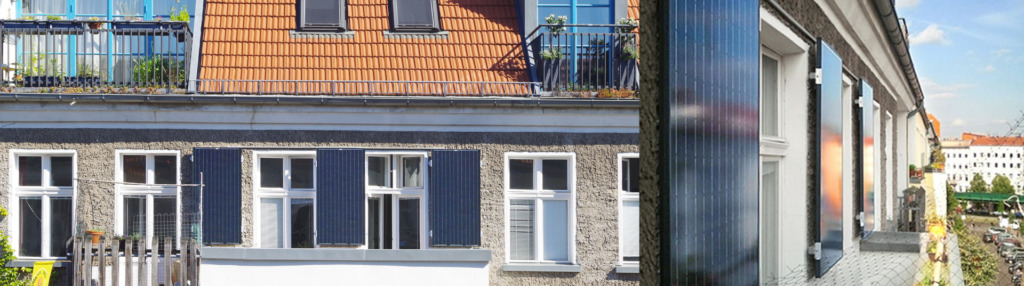
The devices have many technical names: Mini solar system, micro solar system, plug in solar system, mini solar generator, plug in solar device, plugin PV system, plug in solar generator, micro solar generator, plug in PV device, micro solar module. They are also known colloquially as balcony solar systems, guerrilla PV or balcony modules. This refers to plug-in solar devices with an output of less than 600 watts that can simply be connected to the socket.
The potential is huge and the application is very simple: plug-in solar devices that have their own inverter can feed directly into the domestic power grid using a Schuko plug. The electricity meter then runs more slowly. This is often the only way for tenants and homeowners who have no space other than their balcony to participate in the energy transition. However, the feed-in via the Schuko plug has not yet been standardised. Many grid operators therefore respond to applications with false statements and threats.
Current draft standard creates further barriers for small plug-in solar devices
An amendment to the standard that regulates simple and safe access of appliances to the domestic power grid could give a huge boost to installations and thus to the expansion of renewable energies. However, the draft presented by the responsible DKE committee for the DIN VDE 0100-551 standard is going in the wrong direction: if the draft standard becomes valid unchanged, a separate feed-in circuit will be prescribed in future, making it considerably more difficult to commission plug-in solar devices. A separate circuit for a small solar device is unnecessary; a look at the standard for electrical installations shows that there are reserves that can be safely used for the feed-in.
Orientation towards European standard would be useful
This is exactly how European standardisation regulates it. The Netherlands has also been following this standard for years. There is a de minimis limit of 500W/2.25A for feeding PV electricity into final circuits. 200,000 Dutch people have installed even small systems without any incidents. Austria (600 VA) and Switzerland (600W/2.6A) also have such simplified regulations for feed-in from small decentralised systems. A reduction in bureaucracy and appropriate safety regulations create new potential for the expansion of renewable energies. If the DKE, in deviation from European standardisation, wants to prescribe a separate feed-in circuit for the devices, this represents a unique hurdle in Europe for the simple operation of small solar devices.
The DGS is therefore calling for consumer-friendly, legally and factually appropriate rules for plug-in solar devices
- A de minimis limit for the connection of plug-in solar devices by the user
- No reporting obligation for systems up to 800 watts in accordance with EU Grid Code 2016/631
- A rational perception of risk, as in Switzerland, the Netherlands and Austria, to enable safe plug-in solar devices to be put into operation without additional effort in this country too
- A clear commitment by grid operators and politicians to decentralised power generation and to the removal of existing normative hurdles for citizens who operate renewable power generation facilities (prosumers)
Do you have questions about the technical and legal situation of plug-in solar devices? Then read the FAQs here: www.pvplug.de/faq/
Team
PVplug is a group that has come together to break down the barriers for plug-in solar devices and thereby pioneer the urban energy transition. We were formed at Intersolar 2016 and have since gained numerous new members. PVplug has been a DGS working group since August 2016. PVplug brings together the expertise of engineers, scientists, lawyers, energy bloggers, entrepreneurs, specialised journalists and PR workers who work on a voluntary basis.
If you want to find out more and influence the standardisation process for plug-in solar devices, you can go to the DGS information portal here: www.pvplug.deThis makes it considerably more difficult to use plug-in solar devices. A separate circuit for a small solar device is unnecessary; a look at the standard for electrical installations shows that there are reserves that can be safely used for the feed-in.
If you want to find out more and influence the standardisation process for plug-in solar devices, you can go to the DGS information portal here: www.pvplug.de

Contact person